WJA Hydrodemolition Module (HD)

Water Jetting Association (WJA) Hydrodemolition (HD)

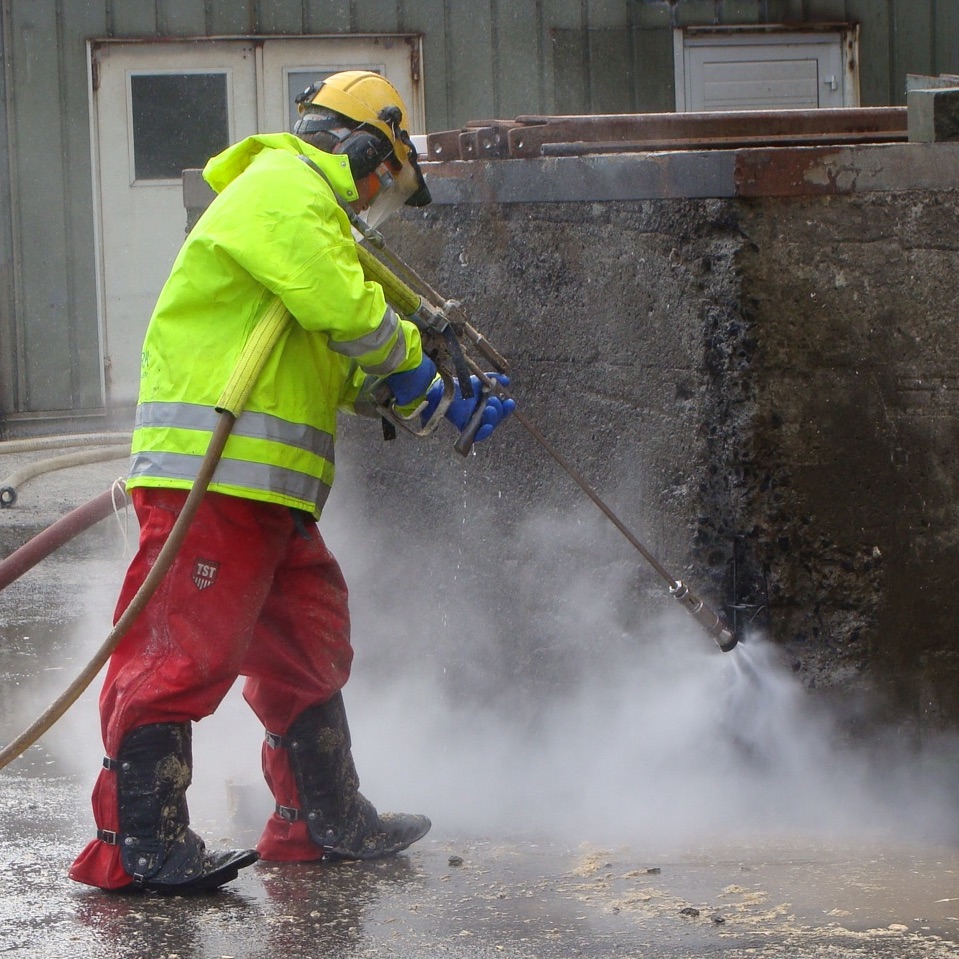
By attending the Hydrodemolition (HD) course, candidates will gain a practical understanding and knowledge of how high-pressure water jets can be controlled to remove concrete or demolish structures.

Key safety points will be covered during the course that considering some of the most common concrete cutting and removal scenarios.

Key features of WJA Hydrodemolition (HD)

01.

One Half Day Contact Time

02.

Classroom and Practical Elements

03.

Receive an Operational Jetting Card

Welcome to ASL Group

Benefits of WJA Training

Safety

Candidates will gain a greater understanding of the dangers and safety requirements of high pressure water jetting.

Up To Date

Sucessfully completing the WJA Safety Awareness course every three years ensures important safety and operational updates are received and maintains a valid WJA certification

Proficiency

Candidates will gain a deeper understanding of the jetting principles increasing their ability to carry out surface preparation and cleaning tasks.

Development

Candidates who successfully complete the course gain a City and Guilds approved certificate and photo card showing their credentials.

WJA Hydrodemolition (HD) Course Content

Nozzles & jets – pumps & ancillaries – pressure controls – water jeting ehos – hazards &injuries – PE – operational procedures.

Scope of hydrodemolition applications. Range fo hydrodemolition tasks. Range of jetting machines suitable for hydrodemolition.

Review nozzle principles – fixed jet nozzles, abrasive cutting nozzles, nozzle life & weacrharacteristics, associated ancillary equipment including automatic & semi automatic.

Hose used in hydrodemolition applications, damage & wear possibilities, hose ancillaries. Bore size & flow ratings.
Principles – fixed jet nozzles, abrasive cutting nozzles, nozzle life & wear characteristics, associated ancillary equipment including automatic & semi automatic.

Range of jetting machines used – engine controls & instruments. Pump pressure controls, review dump/dyr shut & selector/fail safe types, auto engine speed control systems, pressure safety relief.

Water supply/ delivery features – filtration requirements, boost feed pumps, built-in anti freeze provisions.

Information & assessment – site location, access at work area & layout; material to be removed, work piece and task features, water provision, waste disposal hazards.

Selection of equipment & manning levels – jetting machine/nozzles/accessories, number & duties of operators, single person operation. Determine job method, based on safe system of work.

Daily checks – manufacturer’s instructions, other items requiring regular checks.

Setting up – permits/authorisations, barriers & warning signs, positioning of machine, team duties & signals, flushing, leaks check, trial run.

Monitoring of operation- flying debris, waste containment, work standard.

Job completion- client inspection, waste removal, equipment decontamination, return site to safe condition.

Jetting machine & equipment – review features and demonstrate daily checks, start / run / stop.

Job assessment – review & discuss – site location & constraints, accessibility, screening/extraction requirements.

Work piece – nature of material & work to be carried out. Water supply – effluent drainage & waste disposal.

Hazards & use of PE. Discussion of options, agre ojb method.

Site preparation – setting up work area. Team talk – review job method, signals, set up team(s). Positioning of jetting machine, layout & check equipment.

Demonstrate all procedures of full group. For all teams, instruct each operator in each duty.

Trainees carry out exercise – each team following instructions to set up, flush, check for leaks, carry out trial, proceed with operation.

Rotate team members through duties.

Review to each rotation and final review.

Disconnect equipment & clear site.

Review of course content as above, with opportunity for further discussion prior to Questionnaire.

keyboard_arrow_up